Commercial insurers do not have a submission problem.
They have a submission processing problem.
Most carriers receive more submissions than they can effectively evaluate. The challenge is not generating opportunities. It is turning fragmented submission data into underwriting decisions quickly enough to compete.
Every day, underwriting teams receive submissions containing ACORD forms, loss runs, schedules of values, supplemental applications, broker emails, spreadsheets, and third-party documents. Some submissions arrive complete and organized. Many do not. Underwriters are forced to spend valuable time locating information, validating data, classifying businesses, determining appetite fit, and re-entering information across multiple systems before they can begin evaluating the risk itself.
As submission volumes continue to increase, many organizations assume the solution is adding more underwriters. In reality, adding people often scales inefficiency rather than solving it.
When every new hire spends hours reviewing documents, extracting data, searching for missing information, and navigating disconnected systems, productivity gains remain limited. The underwriting team grows, but the operational bottlenecks remain unchanged.
Leading commercial insurers are taking a different approach. Rather than adding headcount, they are transforming how submissions enter the underwriting process. By automating intake, structuring submission data, enriching risk information, and prioritizing opportunities before an underwriter ever opens a file, carriers can significantly increase throughput without increasing staffing levels. Convr's AI Underwriting Workbench is designed around this exact principle: turning fragmented submissions into structured, decision-ready underwriting intelligence. (convr.com)
Why Submission Backlogs Continue to Grow
Many underwriting leaders are surprised to discover that underwriters spend a significant portion of their day performing tasks that are not underwriting.
Before a coverage decision can be made, teams often need to:
* Review incoming emails and attachments
* Locate critical information across multiple documents
* Re-key information into underwriting systems
* Verify business classifications
* Search for prior submissions
* Request missing information from brokers
* Determine whether the risk fits appetite
* Route submissions to the correct underwriting team
None of these activities directly improve risk selection. Yet collectively they consume a substantial amount of underwriting capacity.
The issue becomes more pronounced as submission volumes increase.
A single submission may contain dozens or even hundreds of pages of supporting documentation. Loss runs often arrive in inconsistent formats. Supplemental applications vary by broker, line of business, and carrier. Narrative descriptions of operations can contain important underwriting information that is difficult to identify quickly.
As a result, simple submissions often receive the same manual treatment as highly complex risks.
This creates a dangerous dynamic. High-value opportunities become trapped in the same queue as submissions that will ultimately be declined. Experienced underwriters spend time sorting and gathering information instead of applying judgment. Broker response times increase. Quote turnaround slows. Competitors respond first.
Over time, the backlog becomes self-reinforcing.
As queues grow, underwriters become more reactive. Work is processed based on arrival order rather than business value. Follow-up requests generate additional emails and documents. Managers spend more time redistributing workload. The organization becomes increasingly focused on managing volume rather than selecting profitable risk.
Why Traditional Process Improvements Only Go So Far
Many carriers attempt to solve backlog issues through operational improvements.
They introduce service level agreements, modify routing rules, standardize submission requirements, or create new triage procedures. These changes can certainly help and often produce meaningful short-term gains.
However, process improvements alone rarely eliminate the underlying challenge.
The reality is that underwriters are still being asked to consume large volumes of unstructured information manually.
A better workflow cannot fully overcome the fact that critical underwriting data remains buried inside documents.
A clearer escalation process does not eliminate the need to read hundreds of pages of submission materials.
A revised queue structure does not automatically identify which risks deserve immediate attention.
The fundamental problem remains unchanged: underwriters are spending too much time turning documents into data.
This is why many carriers find that backlog reduction efforts eventually plateau. Initial improvements create efficiency gains, but as submission volumes continue to grow, manual review becomes the limiting factor once again.
To create sustainable improvements, insurers must reduce the amount of work required before underwriting can begin.
That means creating decision-ready submissions automatically.
Creating Decision-Ready Submissions Before They Reach the Underwriter
The most effective underwriting organizations increasingly focus on transforming submissions at intake rather than waiting until they reach the underwriting queue.
Instead of asking underwriters to gather information manually, intelligent intake platforms ingest, classify, extract, and structure submission data as soon as it enters the organization. Convr's Intake module is designed specifically to automate this process, ingesting structured and unstructured documents and converting them into standardized underwriting data. (convr.com)
This changes the economics of underwriting.
Rather than receiving a collection of documents, the underwriter receives a structured risk profile.
Instead of spending time locating information, they begin with key exposures already identified.
Instead of manually reviewing every attachment, they focus on evaluating the factors that influence eligibility, pricing, and coverage decisions.
The impact extends beyond speed.
Structured intake improves consistency because every submission is evaluated using the same framework. It improves collaboration because underwriting teams work from a shared view of the risk. It improves governance because data can be traced back to source documents. Most importantly, it allows experienced underwriters to spend more time applying expertise where it creates value.
The goal is not to automate underwriting judgment.
The goal is to eliminate the manual work that prevents underwriters from exercising that judgment effectively.
How Intelligent Document Automation Changes Underwriting Throughput
Document-heavy workflows are one of the largest contributors to underwriting delays.
Commercial submissions arrive in countless formats. A single account may include ACORD forms, loss runs, schedules of values, inspection reports, supplemental applications, spreadsheets, and broker correspondence.
Historically, every document required human review.
Today, intelligent document automation enables carriers to process these submissions far more efficiently.
Modern AI-powered intake systems can automatically ingest documents, identify document types, extract key fields, classify businesses, and organize submission information into a standardized structure. Convr's platform performs document ingestion, classification, extraction, normalization, and routing as part of a unified underwriting workflow. (convr.com)
The result is not simply faster data entry.
The result is faster underwriting.
When submission information becomes immediately accessible and searchable, underwriters spend less time gathering facts and more time evaluating risk quality. Submission review cycles shrink. Quote turnaround improves. More submissions can be evaluated by the same underwriting team.
Most importantly, the backlog begins to shrink because files move through the system faster than new work arrives.
Using Risk Enrichment and Business Classification to Prioritize the Right Opportunities
Once submission data has been extracted and structured, the next challenge is determining where underwriting attention should be focused.
Not every submission deserves the same level of review.
Some risks clearly fall outside appetite and should be declined quickly. Others align closely with target classes and represent attractive opportunities that should move immediately toward quotation. Between those extremes sits a broad range of submissions requiring additional analysis, investigation, or underwriting judgment.
The problem is that most carriers do not know which category a submission belongs to until an underwriter spends time reviewing it.
This is where risk enrichment and business classification become critical.
Modern underwriting platforms can supplement submission data with additional intelligence, including business classifications, operational characteristics, company information, exposure indicators, historical risk attributes, and external data sources. Convr's underwriting workbench enriches submissions using proprietary and third-party data sources, helping underwriters identify key risk characteristics much earlier in the process. (convr.com)
The result is a more complete understanding of the risk before significant underwriting effort is invested.
Rather than treating every submission equally, carriers can prioritize submissions based on strategic fit, complexity, profitability potential, and urgency.
For underwriting teams managing hundreds or thousands of submissions each month, this prioritization creates a significant capacity advantage.
The goal is not simply to process more submissions.
The goal is to process the right submissions faster.
Why Business Classification Matters More Than Ever
Business classification has always been fundamental to commercial underwriting.
The challenge is that classification is often surprisingly difficult.
Many submissions contain vague descriptions of operations. Different brokers may describe identical businesses in completely different ways. Companies frequently operate across multiple industries, locations, and exposure categories.
Manual classification requires research, interpretation, and experience.
AI-driven business classification dramatically accelerates this process by analyzing submission information and identifying likely classifications automatically. Convr's platform can identify business classifications, operational exposures, employee counts, revenue indicators, and other underwriting-relevant attributes directly from submission materials and external intelligence sources. (convr.com)
This allows underwriters to begin with a clearer understanding of what the business actually does.
More importantly, it improves consistency.
When classification varies across underwriters, appetite decisions become inconsistent. Similar risks may receive different treatment. Reporting becomes less reliable. Portfolio management becomes more difficult.
A standardized classification framework helps carriers make more consistent underwriting decisions while reducing the investigative effort required on every submission.
From Data Extraction to Risk Intelligence
Many organizations focus their AI initiatives on document extraction alone.
While extraction is important, it only solves part of the problem.
The real value comes from transforming extracted information into underwriting intelligence.
A commercial insurance submission contains far more than individual data fields. It contains relationships between exposures, operations, classifications, loss history, locations, ownership structures, and underwriting outcomes.
Understanding those relationships requires context.
Convr's Risk Context Engine was designed specifically to provide this context through a commercial P&C ontology, knowledge graph, and structured insurance schema. The platform connects underwriting concepts, exposures, classifications, business entities, and historical data to create a machine-readable representation of risk. (convr.com)
This distinction is important.
Many AI solutions can extract information.
Far fewer can understand what that information means within a commercial underwriting environment.
Without underwriting context, AI systems often produce outputs that appear reasonable but lack the consistency, explainability, and reliability required for insurance decision-making.
With underwriting context, AI can help carriers move beyond automation and toward intelligent decision support.
Explainable AI and Human-In-The-Loop Underwriting
One of the biggest concerns surrounding underwriting automation is trust.
Underwriters, compliance teams, regulators, and executives need confidence that AI-assisted recommendations are accurate, consistent, and defensible.
This is why explainability has become one of the most important requirements in modern underwriting technology.
If a submission is classified as out of appetite, users need to understand why.
If a risk score is generated, users need visibility into the factors driving that score.
If a submission is prioritized ahead of others, the rationale should be clear and auditable.
Convr's approach focuses on grounding AI decisions within its underwriting knowledge graph and ontology so outputs can be traced back to source documents, data elements, and underwriting logic. This creates transparency while maintaining the speed benefits of automation. (convr.com)
Importantly, explainable AI does not replace the underwriter.
It supports the underwriter.
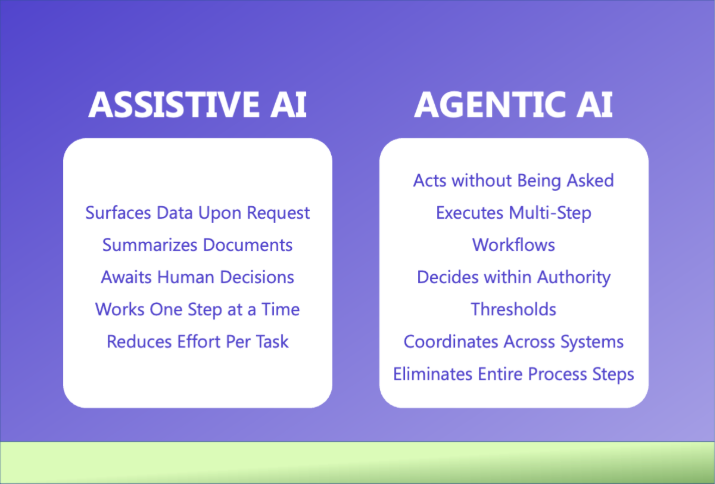
The most successful carriers use AI to handle information gathering, classification, enrichment, prioritization, and workflow orchestration while keeping final underwriting judgment firmly in human hands. Convr describes this approach as Human-in-the-Loop underwriting, where AI structures and presents information while underwriters review, validate, and make final decisions. (convr.com)
This balance improves both productivity and governance.
The Future of Submission-to-Quote Workflows
Commercial underwriting is entering a new phase.
For decades, underwriting capacity was directly tied to headcount. More submissions required more people. More growth required more hiring.
That relationship is beginning to change.
AI-powered underwriting workbenches now allow carriers to process significantly more submissions without increasing staffing levels by reducing the manual effort required at every stage of the submission-to-quote lifecycle. (convr.com)
The carriers that gain the greatest advantage will not necessarily be the ones with the largest underwriting teams.
They will be the ones that create decision-ready submissions fastest.
When submissions are automatically ingested, classified, enriched, scored, prioritized, and routed before an underwriter becomes involved, the entire workflow accelerates.
Quote turnaround improves.
Broker responsiveness improves.
Underwriter productivity improves.
Most importantly, carriers can focus their expertise where it creates the greatest competitive advantage: making better underwriting decisions.
FAQs
Can AI underwriting eliminate submission backlogs entirely?
AI alone does not eliminate backlogs. However, it can dramatically reduce the manual effort required to process submissions. By automating intake, extraction, classification, enrichment, and routing, carriers can increase throughput and reduce queue growth without increasing underwriting headcount.
Does AI replace commercial underwriters?
No. AI is most effective when it augments underwriters rather than replacing them. Automated systems handle data-intensive tasks while underwriters focus on risk selection, pricing, coverage decisions, and broker relationships. Human expertise remains critical for complex commercial risks. (convr.com)
How does explainable AI improve underwriting governance?
Explainable AI provides visibility into how recommendations, classifications, and scores are generated. This helps carriers satisfy internal governance requirements while supporting transparency, consistency, auditability, and regulatory compliance. (PR Newswire)
What is a commercial insurance ontology?
A commercial insurance ontology is a structured framework that defines underwriting concepts, classifications, exposures, and relationships. It enables AI systems to understand insurance data in context rather than simply processing isolated fields. Convr's Risk Context Engine uses a commercial P&C ontology and knowledge graph to support underwriting intelligence. (convr.com)
Where does AI deliver the greatest underwriting productivity gains?
The largest gains typically occur during submission intake, document processing, business classification, data enrichment, risk prioritization, and workflow management. These activities consume substantial underwriting capacity but can often be automated or accelerated through AI-assisted workflows. (convr.com)
How can carriers improve submission-to-quote speed without hiring more underwriters?
The most effective approach is reducing the manual effort required before underwriting begins. Creating decision-ready submissions through automation allows underwriters to spend more time evaluating risk and less time gathering information, which increases throughput without requiring additional staff.
Conclusion
Commercial insurers do not reduce submission backlogs by working harder.
They reduce them by eliminating the manual work that slows underwriting down.
The traditional submission process forces underwriters to spend valuable time reviewing documents, searching for information, classifying businesses, gathering context, and determining next steps before meaningful risk evaluation can even begin. As submission volumes increase, these activities become the primary constraint on underwriting capacity.
Modern AI underwriting platforms change that equation.
By automating intake, extracting and structuring submission data, enriching risks with additional intelligence, prioritizing opportunities, and supporting explainable decision-making, carriers can create decision-ready submissions before they reach the underwriting queue.
The result is faster quote turnaround, improved broker responsiveness, greater underwriting consistency, and significantly higher productivity from existing teams.
Most importantly, underwriters spend less time processing information and more time doing what they do best: evaluating risk and making profitable underwriting decisions.
To learn how AI-powered intake, enrichment, classification, scoring, and workflow automation can help your organization reduce submission backlogs and improve underwriting performance, explore the AI Underwriting Workbench at Convr.