Use Cases

use cases

What We're Learning

XX MIN READ

The Future of P&C Insurance Underwriting

Technology and Talent Are Reshaping the Insurance Industry​

Case Study Demographics Survey

Executive Summary

Insights from Insurance Management on the Shifts Driving Underwriting Performance and Retention

The commercial property and casualty underwriting function is undergoing rapid transformation. As digital tools, automation, and AI reshape traditional processes, commercial property and casualty (P&C) insurance leaders are racing to modernize their teams and technology.

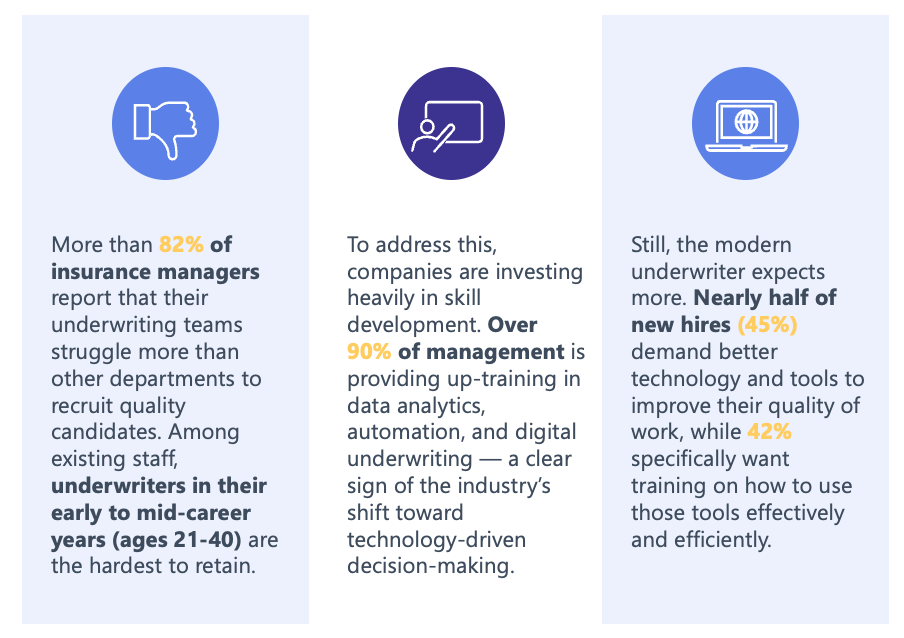
The recent 2025 Convr Insurance Talent and Tech Trends Survey reveals that more than 90% of insurance managers and above are actively up-training their underwriting teams in data analytics, automation, and digital underwriting. Yet despite these efforts, organizations still face significant talent and technology challenges that threaten efficiency, accuracy, and employee retention.

Key findings include:

  • Employee retention risk is highest among underwriters aged 21-40 - the very demographic positioned to lead the industry forward.
  • 45% of new underwriting hires request better access to technology and tools, and 42% want training on the latest systems.
  • 82% of managers believe their underwriting teams struggle more than other departments to attract quality talent.
  • 95% of leaders expect more underwriting tasks to be automated in the coming years, yet manual data entry remains the top barrier to speed and accuracy.

The message is clear: the next era of underwriting depends on smarter tools, simpler processes, and strategic investment in talent.

The Talent Challenge: Retaining and Reskilling the Next Generation

Insurance leaders overwhelmingly agree that underwriting talent can be challenging to find - and even harder to keep.​

Screenshot 2025-11-07 at 2.23.22 PM

The takeaway: attracting and retaining the next generation of underwriters requires a dual focus on career growth and technology empowerment.​

Technology Gaps Undermine Efficiency and Accuracy​

Understaffing and outdated technology are having measurable downstream effects on underwriting accuracy and customer experience.

  • 70% of managers believe that understaffing leads to inaccurate information in quotes.​
  • 82% believe understaffing directly harms customer experience.​
  • 56% cite manual data entry and collection as the number one issue slowing down underwriting operations.

In fact, managers ranked the top 10 causes of underwriting slowdowns as follows:​

Screenshot 2025-11-07 at 1.39.24 PM

The Automation Imperative

Nearly 95% of insurance leaders expect a higher percentage of underwriting tasks to be automated over the coming years. In fact, more than 80% believe that at least 25% of today's manual underwriting work could be automated.​

The potential gains are substantial. One Convr customer reported reducing quote turnaround time from 1-2 days to just nine minutes after implementing automated underwriting workflows - a testament to the power of automation and intelligent data ingestion.

For an industry still battling staffing shortages and data bottlenecks, automation represents not just efficiency - but sustainability.

Technology as a Retention Strategy

Better technology doesn't just improve productivity - it improves retention. 84% percent of insurance managers believe that upgraded tools and automation will probably or definitely reduce employee attrition.​ ​As one senior underwriting leader noted, "When we remove the repetitive, manual work underwriters can focus on what they actually trained for - risk assessment and decision-making."

Technology investments are already accelerating. 73% of companies delivered new underwriting tools to their teams in 2024, and 83% plan to deliver more in 2025.

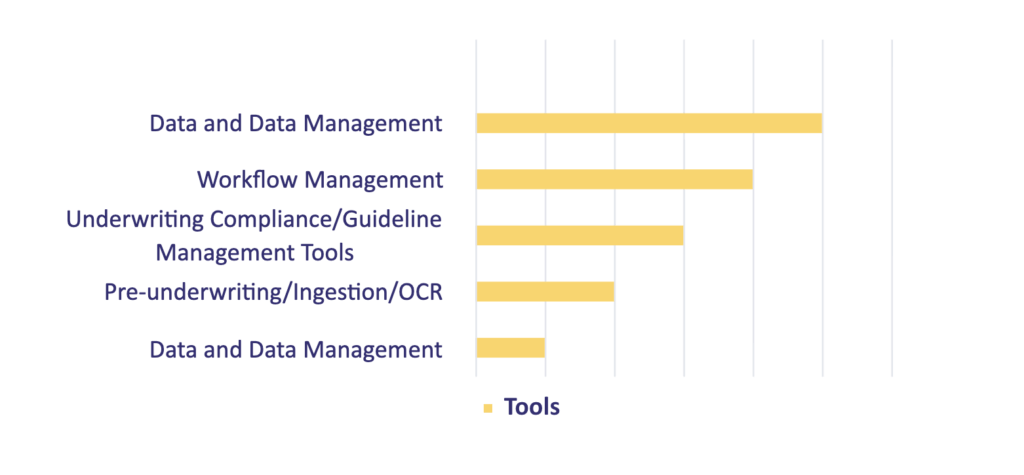
When asked which tools have the most impact, managers ranked the top five as:​

Screenshot 2025-11-07 at 1.47.12 PM

This hierarchy highlights a clear emphasis on data visibility, compliance, and automation - all key to modernizing underwriting at scale.

What Underwriters Need Most

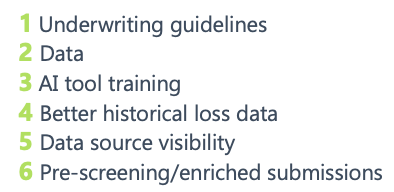
Respondents indicated that their underwriting teams would benefit most from simplified access to critical resources. In rank order, they cited:
Screenshot 2025-11-07 at 2.27.25 PM

Simplifying access to this information - and integrating it into daily workflows - is essential to improving accuracy, speed, and employee satisfaction.​

Top Skills for the Modern Underwriter

Even as automation grows, the human element of underwriting remains central. Commercial P&C insurance managers identified communication, detail orientation, and decision-making as the top three skills they seek in underwriting team hires.​ ​Even as automation grows, the human element of underwriting remains central. Commercial P&C insurance managers identified communication, detail orientation, and decision-making as the top three skills they seek in underwriting team hires.​ ​These "power skills" complement automation by ensuring underwriters can interpret, validate, and communicate insights from digital tools effectively.

A Vision for a Smarter, Faster Underwriting Future​

Nearly 95% of underwriting management agrees that their company's performance could improve through greater efficiency in underwriting processes. This consensus underscores a critical opportunity: to unite people, process, and technology in a cohesive digital strategy.

The path forward involves:

Automating routine work such as data collection, entry, and validation.​ Modernizing workflows through integrated data sources and workflow management systems.​ Training underwriters on AI tools and analytics to support faster, more accurate risk assessment.​ Improving data quality and accessibility to eliminate guess work and manual searches.​ ​Investing in experience - ensuring underwriters have tools that make their jobs easier, faster, and more rewarding.

Conclusion

The commercial P&C insurance underwriting profession stands at a turning point.​ ​While challenges in talent, staffing, and technology persist, the industry's direction is unmistakable: digital transformation is no longer optional - it's a competitive necessity.​ ​As automation expands and data becomes more central to decision-making, insurers that prioritize technology, training, and employee experience will not only operate more efficiently but also build the kind of workplaces that attract and retain top underwriting talent.​ ​The future of underwriting isn't about replacing human expertise -it's about amplifying it through technology.

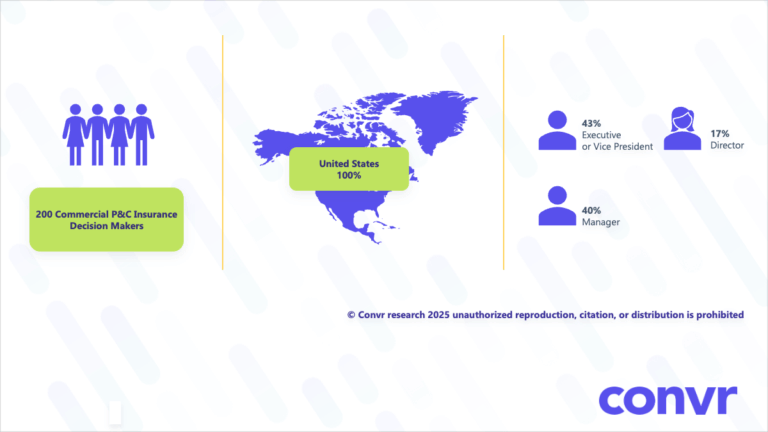
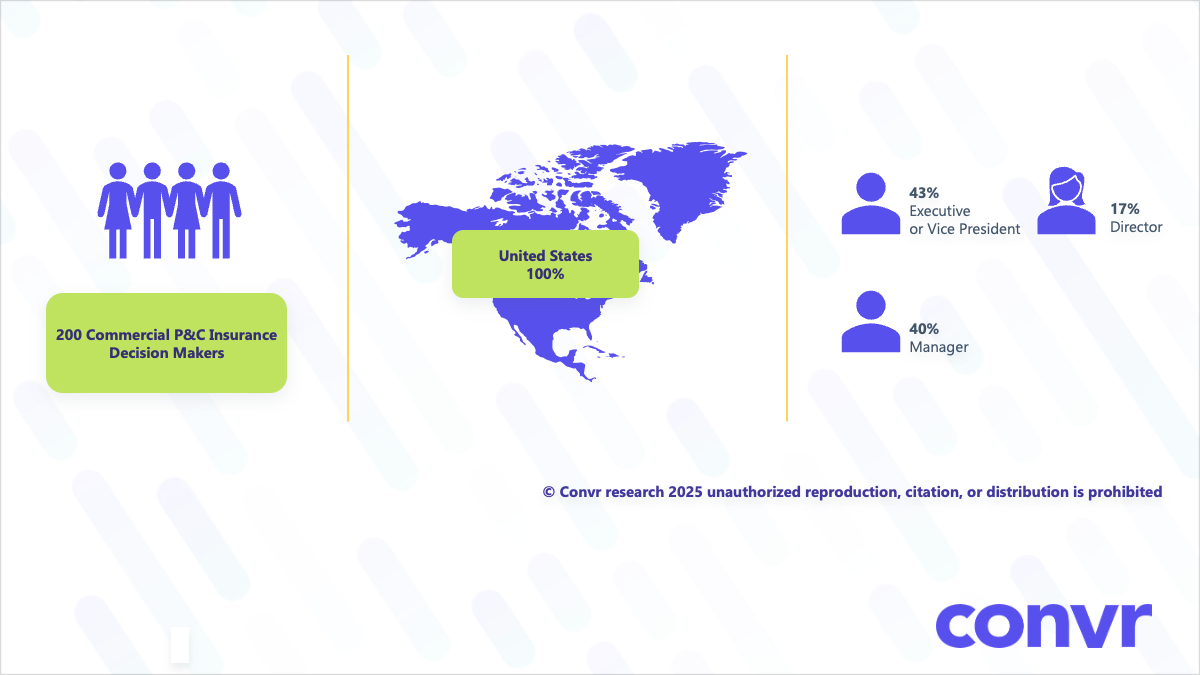
Convr surveyed 200 commercial property and casualty (P&C) insurance decision-makers across the U.S. to dig into the role talent and technology play in driving results.

Survey Info
XX MIN READ

Modernizing Underwriting:Turning to Risk Scores

Modernizing Underwriting:

Turning to Scores

Risk Score bar chart

An Age-Old Problem

How do you select the right risk and price it appropriately? That's the goal of insurance underwriting. There is a delicate balance to charging acceptable rates and maintaining profitability. This is the domain of insurance underwriters who rely on historical data and actuarial analyses to evaluate and analyze the risks.

While the science behind it is valid, little has changed over the years in the way underwriting is performed by commercial insurance underwriters. Every day, thousands of these workers clock into their jobs with the intent to manage risk. They trudge through the mire of imperfect data, old policies, predictive analytics, online information and more to get to a place where they can comfortably accept, avoid or reduce the risk to their company. And why is it so hard? Because no single source is reliable, transparent, or comprehensive for assessing current or future risk.

The very essence of the underwriter's job is about making the best decision possible for their company, and they don't want to get it wrong. An inaccurate assessment of the risks associated with writing a policy or from insufficient premium could result in negative impact to loss and combined ratios. But, needless to say, sometimes they make mistakes.

As if this pressure is not enough, the sky-high pile of submissions and staffing shortages are among the many challenges these professionals face. Plus, there are dozens of cumbersome tasks and weeding through voluminous data sets and sources. Old underwriting tools require them to manually key in submission information from incoming documents. And then, the required quality checks contribute to longer lead times and added stress to maintain their high underwriting standards. The pace of work for today's underwriting professionals is accelerating and the pressure is only getting greater.

Now more than ever, the demand for faster submission processing and improved customer experience has carriers looking for ways to speed submission to quote. Insurance providers want straight through processing (STP) and their customers want real-time answers, quotes, and binders.

Happily, there are new solutions. Convr's Scores is one way underwriters are expediting their workflow, improving speed-to-quote and feeling assured their decisioning is sound.

Learn More

Machine Learning (ML) Modeling for Scoring Risks

Since 2019, Dr. John Henry, a consultant for Convr and the data science team have been forecasting risk related outcomes one year into the future. This might not seem like a big deal but since most commercial policies have a one-year duration or less, this is enough to provide underwriters with greatly increased confidence throughout the policy term. Examples of the events ML models are trained to forecast include injuries and fatalities.

The team trains the models on recurring schedules to include most recent data, consider new data sources, and improve performance over time. And the findings are presented in an easy-to-understand format - on a scale of zero to 100 called a risk score.

Convr's patented AI technology leverages ML models that are specifically trained for the commercial insurance industry. These models navigate structured and unstructured data from thousands of data sources and more than four billion data points to verify, cross-reference and deliver critical underwriting insights in real time.

Why Scoring Risks Works

Convr's risk scoring capability is driven by the need for accuracy and efficiency. Scores upgrade underwriter capabilities by providing the advanced data they need to make better and faster decisions. Convr's Scores deliver a single number measure of risk for businesses that an insurer can look to and quickly assess the relative risk of insuring a business and prioritize submissions. Companies that return a higher score would be more risky to insure while those with lower scores would likely present less risk.

Risk scoring brings more science and speed to the art of underwriting

For example, an underwriter can quickly see that a score of 90 means only 10% of businesses are more risky, while a score of 30 means 30% of businesses are less risky. The higher the score, the higher the risk. For an underwriter, it is as simple as filling in the name and address of a business and seeing real results that can affirm decisioning.

Risk Score slider

Scoring Simplified

Scores tell the underwriter where a business is on the risk distribution. A business with a score of 100 means it is in the riskiest 1% of businesses. A business with a score of 1 means that it is in the 1% of least risky businesses.

View Risk Score Sample

Convr's Data Science team found that underwriting profit in commercial auto had been trending down for several years at the time they began working on commercial auto models. His initial research looked at commercial auto loss experience at the industry level, and preliminary loss models were functions of (mostly) many geotemporal demographic and economic variables. Additional models were trained for commercial auto litigation verdict amounts, and large individual losses.

"Ultimately, we found that modeling accidents, injuries, and fatalities at the business level in a forward-looking way resulted in the most valuable predictive model(s) for underwriters. In the years since, these models have evolved and improved through collaborating with underwriters, actuaries, and claims professionals, and using more sophisticated methodologies."

Dr. John Henry

Consultant, Convr

Risk Score auto net performance

Source: Best's Market Segment Report; March 28, 2019

US Commercial Auto

Net Underwriting Performance

Today, Convr's commercial auto risk score modeling framework incorporates all these learnings, leverages Convr's massive data-lake that includes thousands of data sources - updated on a recurring schedule - always forecasting risk one year into the future. In 2022, Convr performed a retrospective study to validate how well our commercial auto risk scoring model was forecasting risk.

Accidents
Injuries
Fatalities

The Results

The results showed a convincing (and expected) relationship between Convr's Scores and injuries and fatalities per power unit. Businesses with higher scores experienced more of these events, on average, and businesses with lower scores experienced fewer of these events, on average. The study shows clearly that insurers with access to Convr's Scores in early 2021 would have been able to make decisions about current and potential insureds that would have resulted in better loss experience in the year ahead.

In the area of commercial auto for example, customers who were writing these policies have been avoiding the most risky insureds or those with the highest scores. They have been able to prioritize best risks (businesses with lowest scores). And they have been able to charge more (less) premium for insureds with higher (lower) scores.

See Real Results with

Scores and Risk 360 AI

Increase underwriting productivity

Prioritizing and reviewing submissions is often very manual and cumbersome. With d3 Risk Score, underwriters can rapidly narrow risks within their appetite and deep dive on selected risks via d3 Risk 360 (vs. Google search and DOT/Safer reports).

Reduce underwriting operating costs

Convr's implementations have seen a material reduction in operational cost across clearance, underwriting file preparation. Automation of these steps have helped our customers lower operational costs (FTE or BPO).

Increase speed to quote

A systematic approach, with d3 Score and d3 Risk 360 reduces administrative burden on Underwriters, reduces time to quote.

See growth of premiums

Increased underwriting productivity and speed-to-quote is expected to drive increased quote ratios, resulting in increased binds/new business.

Calibrate risk selection

Utilizing d3 Risk Score and d3 Risk 360, Underwriters can leverage relevant and timely information on insureds from Convr's data-lake of 2000+ data sources; high performing d3 Risk Score ML models further inform risk selection - this typically translates to better calibration of risk and greater consistency across the underwriting team.

Pricing adequacy

By monitoring loss performance with d3 Risk Scores, customers can identify segments of their book of business where they have an opportunity to adjust pricing to better reach their target loss ratio.

"The real opportunity is to look at your current book of business and incoming submissions and make better decisions today, tomorrow and going forward."

Dr. Addison Putnam

Consultant, Convr

Dive Deeper with Risk Relativity

Risk Score bar chart

workplace safety slider

Through risk relativity, underwriters can learn how the risk of a business compares to the average of the population through a score. One such score is specifically focused on workplace safety. For this model, we have found that some of the significant predictor variables for risk are previous infractions committed, type of permits assigned to a company and the number of years a company has been in business.

Why Scores, Why Convr?

To recap, achieving superior underwriting performance with Scores AI and Risk 360 AI can mean a commercial insurance underwriter can make more informed decisions, faster. In this way, insurance providers can realize transformative business growth and success. But, it is important to recognize that true transformation requires more than new technology. You need to be prepared for a shift in organizational mindset and culture, as well as the skill sets and roles of underwriters themselves. This is the secret to true competitive advantage.

As technology continues to transform the insurance industry, you can lead the revolution in your organization by reaching out to Convr. Convr's AI-infused commercial underwriting platform turbo-charges underwriting with more accurate and efficient decision-making and a greatly improved user experience.

At Convr, we are your partners in defining a new and better vision for commercial P&C insurance underwriting.

Realize End-to-End Underwriting Excellence with Convr AI

Experience how commercial P&C insurance organizations benefit from submission through quote with a frictionless process enriched by AI decisioning, empowering them to make better decisions, faster.