\n
In the commercial insurance industry and others, conversations about artificial intelligence (AI) proliferate. So too does discussion around digitization and optical character recognition (OCR). Many insurance organizations have started their journeys, but others are just getting started.
\n
What’s the key to success?
\n
Like with so many things, the key to success is having a vision of the future – a plan that takes an enterprise view. In building that vision of the future, insurance organizations need to recognize that the immediate possibilities are not the endgame. Solutions must be extensible and purpose-built to be best-in-class and stand the test of time.
\n
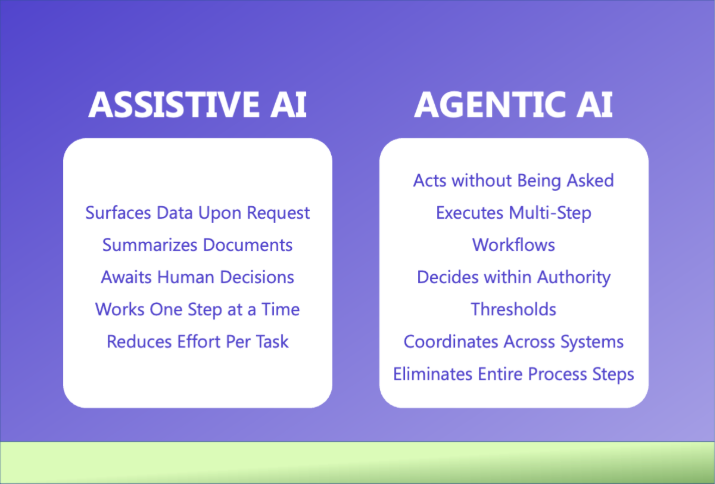
For the past seven years, Convr AI has taken generic large language models (LLM) and converted them to Industry-specific LLM to address the particular requirements of commercial p&c, specialty lines and workers’ comp insurance. This industry specificity is particularly important for processing speed and the avoidance of drift – one of the newly acknowledged risks associated with AI.* Our trained and tuned assistive AI best predicts which data meets extraction objectives, best answers underwriting questions, scores submissions and exposes the right data to expose risk characteristics – all to streamline the submission-to-quote process in commercial insurance.
\n
To date, Convr AI has processed more than 2.3 million submissions through its purpose-built platform. Since January 2021 Convr has classified 25,965,229 assets, including ACORD, loss runs, emails, statement of values (SOVs), etc.) And with each submission and classification Convr AI algorithms become more sophisticated and precise in meeting the required search outcomes. This is how companies using Convr see a 130% increase in efficiency with meaningful increases over time.
\n
Partnering with machines to focus on data need vs. data completeness.
\n
Convr’s focus on commercial insurance has led to an industry domain expertise that allows us to address the specific processes and needs of the industry. We have developed an understanding of underwriting efficiency like few others and understand the tradeoffs such as: Humans processing excellence achieves a roughly 97% accuracy rate; 90% accuracy from machines, and nearly 100% when digital assistants support human-in-the-loop (HITL). The tradeoff lies in processing time where humans are the slowest. Recognizing, as we do that machine capability increases with repetition and human assistance and processing time is maximized with machines alone, best practice at Convr optimizes the human to machine interaction for the benefit of human experience and efficiency.
\n
Beyond the human to machine interaction, Convr has documented that not all information on emails and documents is helpful to the underwriting process. Machines do an excellent job of scanning data fields for purpose. In fact, machines do this better and faster than humans. Studies have proven that if you provide a PDF file attachment to an email, recipients will open it, even when it’s not useful. Machines can be trained to do so only when it’s beneficial to the outcome. Convr, for instance can complete the essential underwriting data gathering from its built-for-purpose data lake with only a company name and address – completing the generally 51 out of 94 fields on a standard ACORD to assess only the useful underwriting exposure information that supports appropriate pricing.
\n
*Drift describes the phenomenon when the accuracy of AI models can drift (degrade) when production data differs from training data.
\n
Industry Specific Use Cases Mater – Consider the Following Three:
\n
1. Digitizing Submissions for Purpose
\n
In the submission digitization process, multiple documents are split, extracted and digitized into a single view with lineage from insured and broker data inputs. Information is typically received from submission emails including ACORD and other forms, loss runs, etc. Optical character recognition (OCR) is a foundational capability to extract information off submission materials, though, as stated earlier, it's important to recognize that not all fields are relevant for the underwriting process.
\n
For this reason, purpose-built AI scans the submission documents for only the relevant fields and data. The goal is to capture only the relevant information to maximize both machine and human efficiency. In fact, underwriters tell us that only 10-12 fields on some ACORD forms are required for clearance and just 15-20 additional fields are required for rating. By extending the digitization process to automate rules and decision-making for file preparation and clearance insurance organizations drive faster clearance times, improved accuracy and reduced costs.
\n
Extraction and normalization of information from a variety of insurance documents (structured and unstructured) requires the machine capability to transform the data fields into a standardized structure, irrespective of document format. Part of digitization excellence is the application of artificial intelligence and machine learning to support rapid integration of new source documents and then to identify the most credible source of data.
Importantly, it’s then added to the knowledge graph – the corpus of knowledge already known for continuously enriching information. Essential fields are those that drive the best decisions and build the foundation of an organization’s future decision-making. When digitization is purpose-specific, the captured data fields are far more likely to contain accurate, meaningful and complete information. In the best case, accuracy checks can be completed with side-by-side validation. That’s what we do at Convr AI.
\n
2. Enriching Applications & Submissions
\n
Another strength of purpose-built AI is its efficiency in analyzing a large number of data sources to serve up the best data for an accurate identification the business – pre-filling business class/industry code (Business Identity, DBA's, NAICS, SIC, WCC code.)
\n
Submission enrichment for commercial insurance enhances the insurance application data provided by an applicant or producer. This process involves scanning potentially thousands of data sources to collect and analyze additional information about the applicant’s business operations, risk exposures, and claims history. The valuable and relevant data is then appended to the application to provide a more complete and accurate picture of the risk.
\n
The result is less manual fact gathering, greater clarity around potential exposures, and better-informed decisions about coverage needs, pricing, as well as necessary mitigation. Examples of data that may be collected and analyzed include financial statements, inspections, loss runs, claims history, and regulatory requirements. Convr AI pulls from the extensive resources in our data lake comprised of thousands of sources and our assistive AI then facilitates in-line enrichment and evaluation.
\n
3. Prioritizing Submissions
\n
Another important use case to consider when reimagining a future state of operational excellence is managing the ebbs and flows of submission volume. Most insurance organizations are well-aware of the July and January first annual production overloads but not everyone considers the periodic deluges that might be tied to factors other than the most common renewal dates.
\n
Large scale cancelations, new books of business andnew producer appointments can all result in surges in applications. When these situations arise, teams often turn to overtime, outsourcing or manual prioritization which is fraught with inconsistencies and inefficiency.
\n
Even when there is a steady volume of submissions, colleagues and customers benefit from a reliable methodology for prioritizing incoming submissions in line with pre-set underwriting rules specific to risk appetite, completeness and winnability.
\n
Using machine learning models (MLM), Convr assesses data extracted from intake and/or a business's digital footprint to better manage the submission prioritization process with digital assistance that is both timesaving and reliably consistent in implementing your business rules. Customers benefit from a reliable methodology for prioritizing incoming submissions in line with pre-set underwriting rules specific to risk appetite, completeness and winnability.
\n
Built for Purpose – Built for the Future
\n
When you embed purpose-built AI into your long-term plan for executional excellence you establish an extensible foundation for layering on future use cases – foreseen and not. While you likely have a vision for the future – part of that vision must recognize that the immediate best opportunities may not reflect those of the future. For that reason, flexibility to incorporate new data, solutions and insights is critical for a future-proof insurance platform.
\n
For insurance organizations it is a universal truth that top resources must be focused on risk identification, mitigation and protecting the viability of business insured operations. This requires a sustained focus on efficiency and accuracy in data gathering, data management and analysis. The best business partners are those directly in sync with these operational requirements; those with that focus and expertise and built on modern foundations like AI and LLM specifically trained for the benefit and particular requirements of commercial property and casualty, workers’ compensation and specialty insurance. This industry specificity is particularly important today for processing speed and ongoing accuracy and tomorrow for platform and industry changes to come.
\n
At Convr AI, our trained and continuously tuned machine learning models deliver the best sources of data for extraction, best answers to underwriting questions, best data to expose risk characteristics, and best scores submissions to meet guidelines – all to streamline and drive valuable insights into the submission to quote process in commercial insurance. For the commercial insurance industry Convr delivers an end-to-end resource for lasting competitive advantage.