XX MIN READThe Definition of an AI Underwriting Workbench
A centralized, intelligent platform that consolidates every tool, data source, and workflow an underwriter needs — from submission to bind, through renewal — into a single decision environment.
Definition
An AI underwriting workbench is a centralized, intelligent platform that consolidates every tool, data source, and workflow an underwriter needs — from the moment a submission arrives to the moment a policy is bound, through renewal — into a single decision environment. It replaces the fragmented stack of spreadsheets, legacy systems, and disconnected data feeds with one unified surface where data flows freely, AI-powered insights are surfaced in context, and workflows are automated or augmented based on underwriting appetite and portfolio strategy.
The workbench is not a productivity layer built on top of existing processes. It is a fundamental reimagining of how underwriting decisions are made — one where the technology absorbs the administrative burden, and the underwriter focuses on judgment, relationships, and complex risk analysis. Can have adjacent capabilities.
All of Convr’s workbench capabilities are anchored to data and specific, production-tested carrier outcomes structured within the Risk Context Engine (RCE). By centralizing P&C knowledge in RCE, underwriters have experienced a 208% reduction in clearance and registration time, allowing them to focus more time on complex risk judgment. Submission triage time drops from 24 hours to 30 minutes, and customers have experienced a 20% reduction in premium leakage because appetite rules reflect live context, not static guidelines.
The AI Underwriting Workbench Landscape – Focused on comprehensive platform with incremental implementation
The commercial insurance underwriting function is under structural pressure: submission volumes are rising, risk complexity is accelerating, and carriers are being asked to do more without growing teams. The underwriting workbench has emerged as the central technology response — evolving from a static desktop tool into an AI-native decision environment. There is broad agreement among carriers that workbench is their dominant planned investment – a higher priority than full core system replacements.

Problem Statement
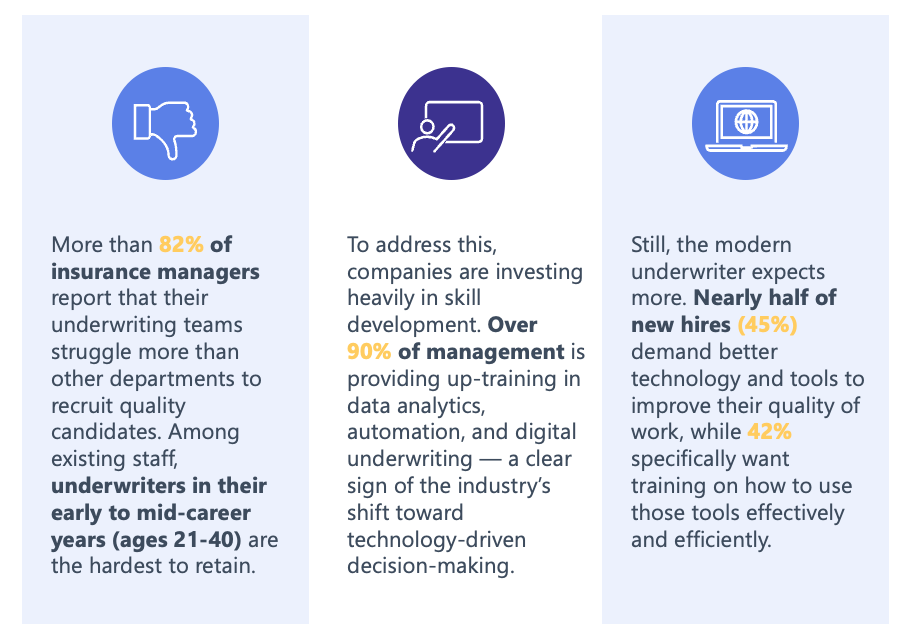
Underwriters are spending nearly half their time on administrative work rather than underwriting. Fragmented systems, manual data gathering, and disconnected workflows make it impossible to process submissions at the speed brokers and customers expect — while still maintaining the quality to protect the portfolio. The status quo is not a productivity problem. It is a loss ratio problem.
Customer Quote: “With 360 Risk and Answers, underwriters can access multiple data points in one place, helping our team work faster, more efficiently, and with greater productivity.”
Performance Impacts with Convr Implementation
Repeatable, measurable underwriting outcomes across submissions and workflow.
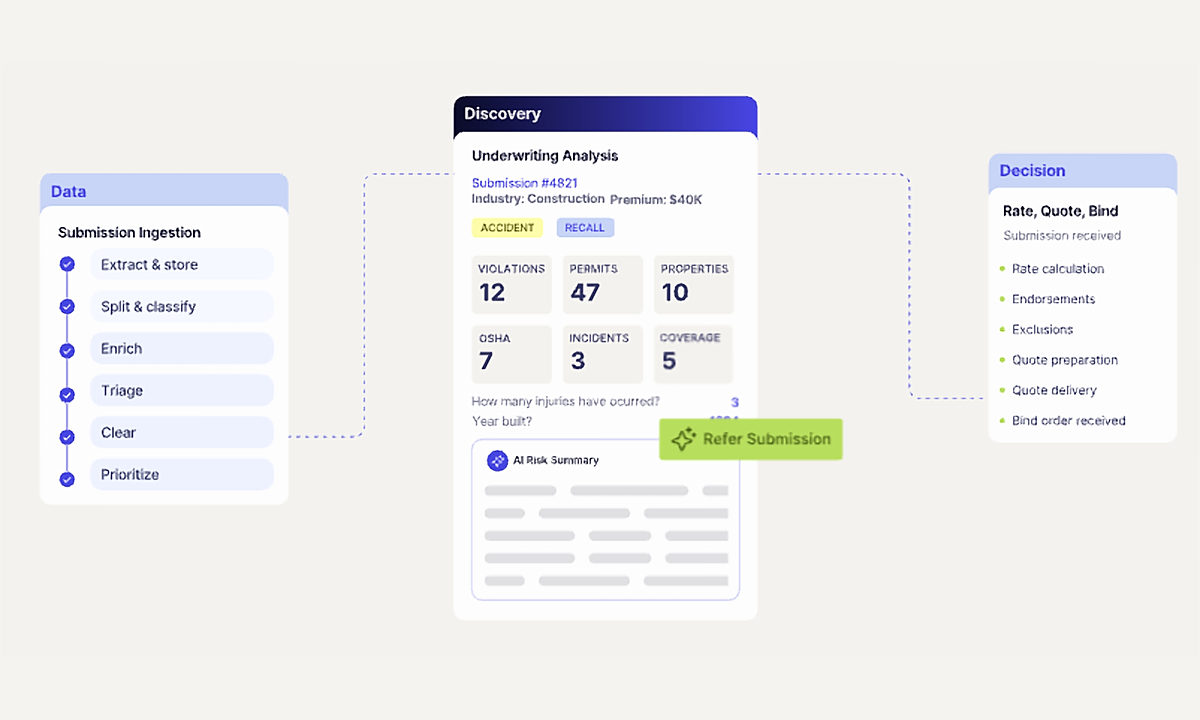
Convr delivers /profitable growth with existing headcount, faster bind, better portfolio quality—not with data architecture. The Convr Risk Context Engine (RCE), with its commercial insurance ontology and proprietary schema has captured and identified 120 billion risk exposures and added 17 billion data points to its 10-year running production – ready to enhance your workflow and underwriting review processes. RCE is the knowledge backbone enabling carriers to extract underwriting logic from legacy PAS with enabled agentic workflows that participate with MCP-based orchestration layers. The result is faster triage, higher decisioning confidence, lower model retraining cycles, where the unified risk context equals better appetite enforcement and reduced portfolio drift in real time.
Supporting Deployment Speed, Productivity Gains & Sustainable Outcomes

Customer Quote: “Having an accurate picture of individual business functions allows us to improve our rating accuracy, which is incredibly important as we write and renew policies.” …we need to have a frictionless path for customers to find us and for us to address their needs.” With Convr “…we’re able to do more on the back end rather than putting it all on the customer… [with] data sources [that] are just going to get better and better over time.”
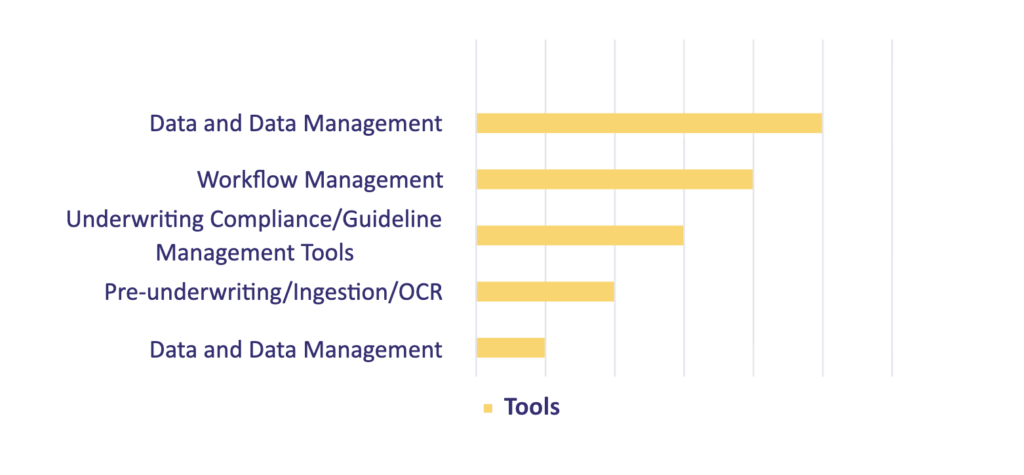
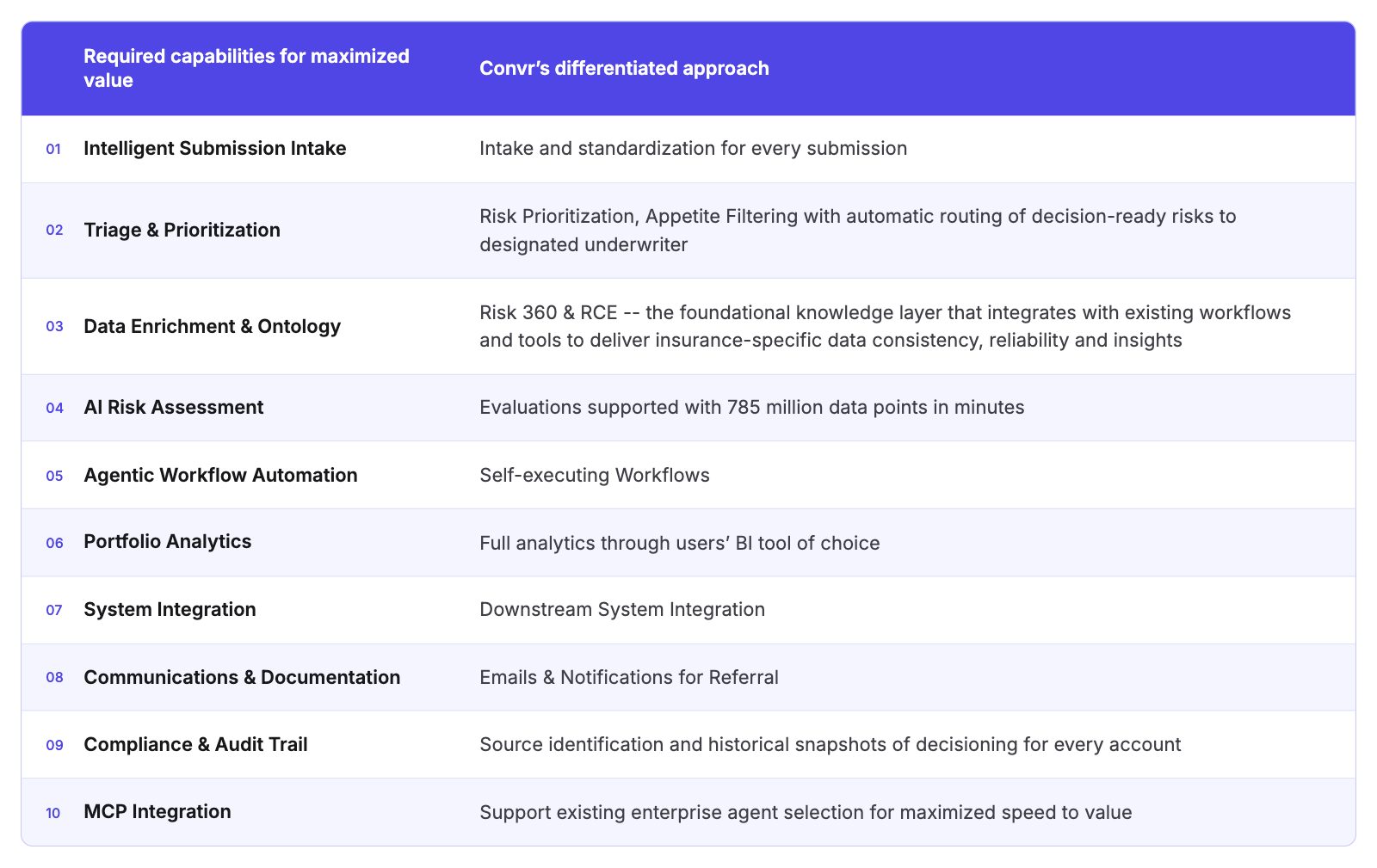
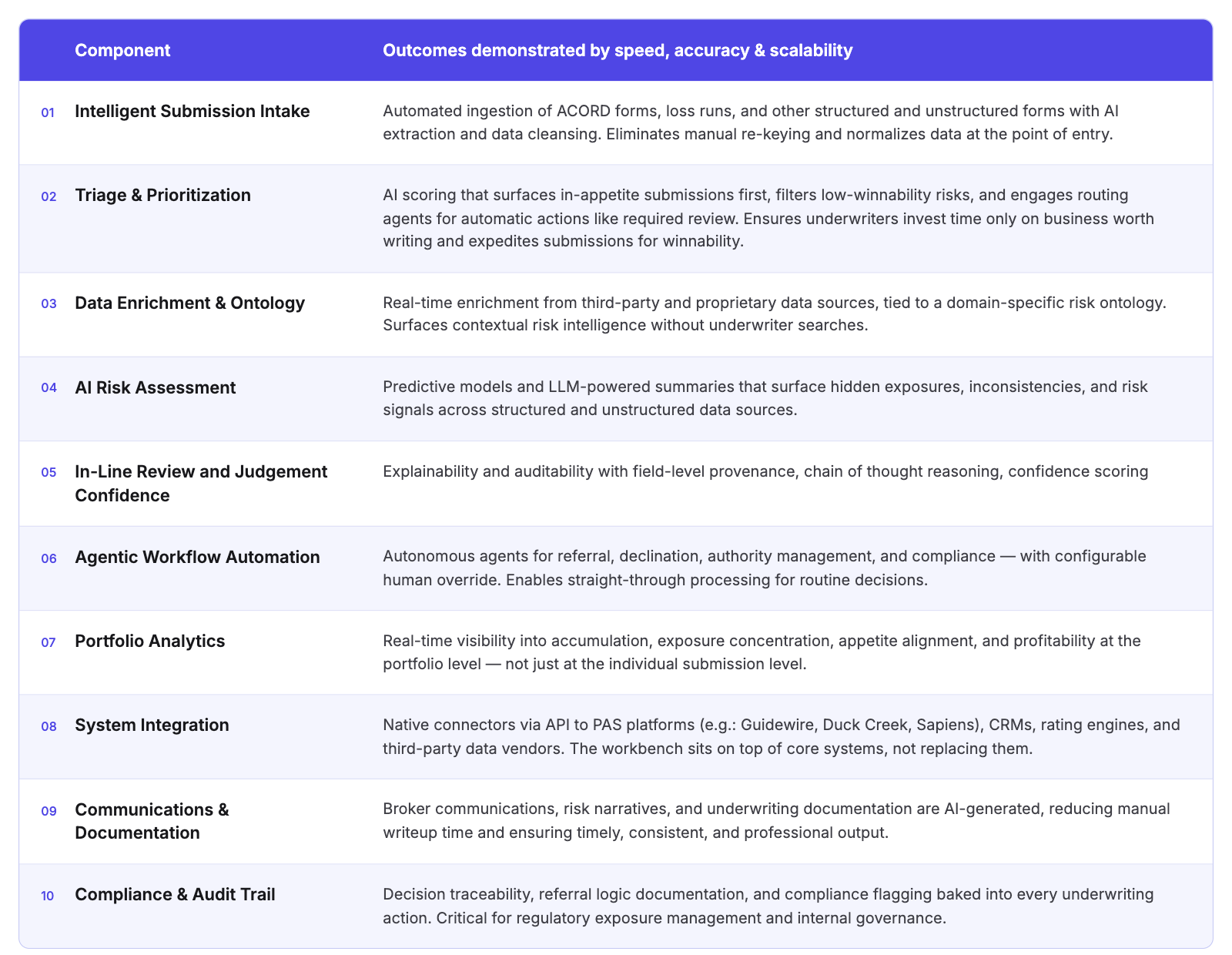
Ten Essential Components of a Modern Underwriting Workbench
(Referencing Datos Workbench Study 2026)
Customer Quote: “Convr has been essential in powering our business with the accurate processing and presentation of data so our underwriters can focus on the human elements of analyzing risk and interacting with our distribution channel.”
Convr Modular AI Underwriting Workbench | Key Differentiators
For insurance organizations, the value of modular is the opportunity for quick time to value. The workbench value can be consumed to support each facet of an insurance operation without a big bang. Convr's modular architecture allows carriers to start with intake-only (RCE for automated triage), then layer underwriting automation, then portfolio steering—without re-platforming or heavy re-implementation cycles. If submission ingestion is a key pain point, customers can start there. Each module is independently trainable and configurable, enabling different business lines or units to run different rules on the same platform.
When teams struggle with triaging different lines of business, Convr can expedite and process improvement starting there. If data enrichment is slowing team productivity, Convr’s Risk 360 data lake comprised of 87 million companies can illuminate data that might otherwise take hours or even days to discover. "Risk 360's industry data enables automatic flagging of missing exposures in submissions—reducing underwriter review cycles and improving loss ratio performance by identifying exposures that otherwise could be missed. When workflow is the greatest stumbling block, Convr can start there with configurable workflows, enabling rapid configuration changes without vendor cycles. Across every step of your underwriting flow, Convr can step-in and improve performance by as much as 130%!
RCE's pre-built P&C knowledge model allows Convr to deploy initial submission-to-triage workflow in just 4-6 weeks, and portfolio-connected underwriting in within 90 days—enabling carriers to see ROI within as little as a policy term year. RCE integrates extraction, validation, enrichment and routing to deliver 3X the processing speed of humans with agentic workflows that learn from each policy decision across the full lifecycle. It enables your teams to shape risk decisioning — adjusting appetite, rules, and workflows without requiring model retraining or vendor cycles."
Founded in Chicago (2016), Convr is the only platform built around a decade-deep commercial P&C ontology — a continuously updated semantic framework that centralizes data, logic, and workflows for every submission. Every layer of the workbench is powered by Convr’s proprietary P&C ontology, data, AI, and workflow. Branded as the Risk Context Engine (RCE), Convr delivers a unified intelligence framework that connects structured and unstructured submission data, business logic, and AI models into a single source of truth. It grounds AI decisions in real underwriting context rather than a generic output better underwriting decisions. Convr’s ontology captures 10 years of P&C expertise to ensure consistent underwriting logic across all submissions and underwriters.
With 10 years of historical underwriting data continuously enriched by more than 2,800 public and private sources and 785 million data points on 87 million companies, Convr’s proprietary Risk 360 Data Lake is time-tested and proven highly effective for hidden exposure detection. Together, the RCE and Risk 360 deliver the essential value of an underwriting workbench: a strategic data foundation that turns AI adoption into repeatable, measurable underwriting outcomes.
Customer Quote: “The Convr AI Underwriting Workbench is the most advanced and visionary platform available today. Our underwriters are eagerly anticipating the workflow, accuracy, and service advantages that we’ll realize once we have this key tool at our disposal.”