August 20, 2024
xx min read

Convr Underwriting Workbench: Putting the Underwriter First

More business—hands down, we all want it, right? Growth and more profitability are a good thing, but with it comes added pressure and stress to perform and keep up with the deep stacks of work and demand that comes along with it. \nInsurance carriers and reinsurers need to be able to capitalize on every opportunity that meets their risk appetite and can keep their portfolio balanced. What better way to do that than with underwriting teams that feel empowered and equipped with modern tools and unified workflows and not bogged down with backlog?\nLet us introduce you to Convr AI. \nIt’s the tool of the time—and of choice, the one many top 20 carriers are selecting to streamline and expedite their workflows and to improve speed to quote. It’s a more human-centric approach—putting the underwriter first, making them in the cockpit of a more advanced, unified and efficient process.\nThe Convr Underwriting Workbench data analysis tool is packed with innovative artificial intelligence and machine learning that gives commercial property and casualty insurers, reinsurers, MGAs’/MGU’s, producers and more the ability to augment decision making during these times of increasing uncertainty.\nWhen our customers so frequently must make decisions based on incomplete or inaccurate information, we can fill in the blanks and complete the picture—giving them the key insights and answers to inform their decision to write a risk or not. The human-in-the-loop (HITL) solution surfaces the right data at the right time while accelerating and enriching the underwriter’s understanding through unique knowledge graphs tailored to each submission.\nSounds simple, right? We really do remove the guesswork for underwriting and operations teams!\nTake our Intake AI product for example and you can see how we simplify the entire ingestion process for underwriters. \nHere’s how we do it:For every submission that flows through your business we extract key data points and augment the information with third-party data to broaden and deepen the risk profile. By automating and digitizing the insurance application process, underwriting teams quote faster, with more confidence, enhanced application data and achieve more nuanced insights.\nPatented capabilities of Intake AI \nIngestion. Ingesting documents in configurable stages from a variety of structured and unstructured documents.\nExtraction. Extracting and digitizing select data fields for clearance, file preparation and underwriting insights. \nQuality Review. Verifying and analyzing field-level documents with “high” or “low” confidence scores to enable underwriting team members to benefit from straight-through processing and in-line quality control (HITL).\nAssembly. Submission application data from structured and unstructured documents and sources, including the digital footprint constructed in Convr's Risk 360 AI.Visualization. Side-by-side the actual document and structured view to fix and/or validate data elements for underwriting insights and analysis and selection.\nValidation. Data lineage with insights specific to source derivation, including date last updated, name of the data source and a direct linkage to the source of the data. \nWhen insurance underwriting teams are already under so much pressure to meet targets related to volume of business written, profitability or other key performance indicators—why not do all you can to alleviate the grind and take advantage of products such as Convr’s Intake AI and other products.\nBy putting your underwriting and operations teams first by investing in top tools of the trade on the market, you can avoid eroding productivity and empower your teams to drive stronger, more consistent underwriting outcomes.\nToday’s underwriters are frustrated by the piles of work and mundane manual tasks that could easily be replaced with technology. They’re well aware that they deserve better and smarter solutions to support them in their work. When time to value is key, solutions such as Convr AI are here and available to improve underwriting performance right now.\nIntroducing dynamic new products and technologies such as the Convr Underwriting Workbench can also reduce operating costs, improve loss ratios and help keep your portfolio balanced. Outpace your competition today with a modularized artificial intelligence underwriting and intelligent document automation workbench that enriches and expedites the commercial insurance submission flow with underwriting insights, business classification and risk scoring.\nTo learn more about our modern underwriting workbench request a demo from Convr’s Business Development team today: \nBook Now!

blogs

Keep Reading

More articles on AI, underwriting and the future of commercial P&C.

XX MIN READ

The Convr Risk Context Engine: Why it Matters to the Chief Underwriting Officer

The problem every Chief Underwriting Officer (CUO) faces isn't a shortage of AI tools. It's a shortage of AI they can trust and embed seamlessly within their workflow.

Generative models, agentic assistants, and large language models have proliferated across the insurance industry at an unprecedented pace. Nearly all of them share the same critical flaw: they’re built on general-purpose foundation models that were never trained on commercial insurance and have never seen a real submission, a real loss run, or a real underwriter's decision. They can produce fluent text about underwriting without understanding it. For a CUO responsible for combined ratios, regulatory defensibility, and the consistency of thousands of risk decisions per year, that gap is a material liability.

The Convr Risk Context Engine (RCE) is the answer to that problem and it’s the only answer of its kind.

What makes the RCE unique

Unveiled on June 9, 2026, the RCE is a commercial P&C knowledge graph and semantic ontology that encodes the language, structures, exposures, classifications, and decision logic of underwriting into a unified, machine-readable model, calibrated against a decade of real submissions, real exposures, and real underwriter feedback from leading carriers in production.

The practical implication of that architecture is profound. The RCE does not approximate what a painting contractor is; it knows the difference between a painting contractor and a roofing contractor at the classification level and it knows how that difference should affect appetite, coverage, and pricing. It understands that "general liability for a habitational account in coastal Florida" carries a specific set of exposure signals that have nothing in common with "general liability for a light manufacturing operation in the Midwest." Rather than just pattern recognition over text, the RCE is structured knowledge about commercial insurance, expressed as a machine-readable graph that every AI capability in the Convr workbench runs on top of.

Calibrated on a decade of production data and more than 2,500 integrated sources, the RCE powers every AI capability across the Convr AI Underwriting Workbench from intake to business classification, risk scoring, data enrichment, and workflows.

Why this matters operationally to the CUO

The CUO's mandate is to make good risk decisions, consistently, at scale, in ways the organization can defend and document exactly with reliability. The RCE advances all these dimensions simultaneously.

Consistency: One of the most persistent sources of combined ratio deterioration is inconsistent appetite application . . . underwriters in different territories or teams making materially different decisions on similar risks. The RCE delivers consistent, traceable, verifiable risk data, in-line, which means the same exposure in the same class code is evaluated against the same criteria every time, regardless of which underwriter opens the file or which office processes the submission. The CUO sets the appetite rules; the RCE enforces them uniformly.

Defensibility: Every classification, appetite call, and risk-score output traces back through the ontology to the source submission documents, loss data, and underwriter decisions that informed it. The regulatory direction is reinforcing the value of the RCE. When a regulator, reinsurer, or internal audit function asks why a particular account was accepted or declined, the answer is not a probability score from a black box. It is a documented chain of reasoning tied to real data. In a regulatory environment that is increasingly scrutinizing AI-driven decisioning, audit-ready outputs are not a nice-to-have. They are becoming a condition of doing business.

Scale: The RCE reduces submission-through-quote times by 70% and increases new business win rates. Carriers using the Convr AI Underwriting Workbench have documented an 8% combined ratio improvement on commercial auto lines, 20,000 submissions per month processed fully automatically on non-admitted lines, and 38% more quotes generated per underwriting assistant on financial lines, with quote generation time dropping from two hours to 20 minutes. These are not projections. They are outcomes from carriers already running the RCE in production.

The distinction that separates the RCE from everything else

As Convr Chief Executive Officer John Stammen stated at the RCE launch, "Everyone talks about models. The real question is what they're grounded in. Without a commercial P&C knowledge graph and ontology underneath them, generative and agentic AI are confident guessers. The RCE supplies the missing context . . . what a submission means, what an exposure is, what an underwriter decides . . . and turns outputs into decisions a carrier can defend."

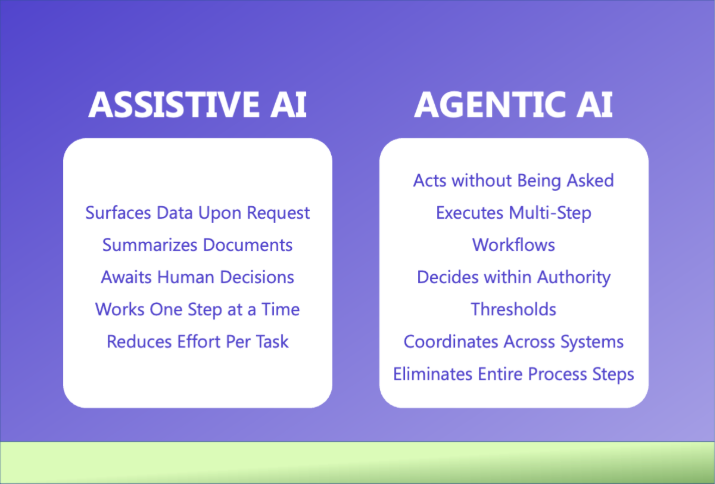
That framing captures the CUO's core concern precisely. A CUO does not need AI that sounds right. They need AI that is right, and that can prove it. Convr unifies fragmented insurance data into a structured data model powered by ontology, schema, semantics, and a knowledge graph within the context engine . . . preserving risk relationships and enabling assistive AI to deliver decision-ready underwriting insights and trace those insights to any historical moment in time. The RCE is the infrastructure that transforms raw submission data, third-party enrichment, and historical loss experience into a single, coherent view of a risk, in real time, at the point of decision.

What this means for the CUO's book of business

For small commercial and BOP books, the RCE eliminates the premium leakage and adverse selection that accumulates when submissions are classified by hand. Business classification errors, misapplied territory codes, and underclassed risks . . . the chronic sources of ratio deterioration on high-volume books are caught at intake before they ever reach a rating engine.

For mid-market and multi-line accounts, the RCE compresses the enrichment cycle that consumes the most underwriter time. Rather than spending two to three days researching an account before rating, an underwriter opens the submission to find the business already classified, the exposure already verified, prior loss signals already surfaced, and appetite already scored against the carrier's own guidelines. The judgment call that makes underwriting valuable happens in minutes rather than days.

For large and complex accounts, the RCE provides the CUO with something that has historically been impossible to achieve at scale: a portfolio-level view of risk concentration, exposure accumulation, and appetite consistency across the entire book, updated continuously as new submissions are processed. The CUO who can see the book in real time, rather than waiting for a quarterly report is the CUO who can act on emerging trends before they become loss events.

The bottom line

The Convr Risk Context Engine is the foundational infrastructure that makes AI in commercial underwriting legitimate. It’s grounded in a decade of real production data, structured around the actual language and logic of commercial P&C insurance, and designed to produce outputs that underwriters, CUOs, and regulators can all defend. For the CUO who is already being asked by their board and their reinsurers how they are using AI, and who cannot afford the answer to be "we're experimenting," the RCE is the answer that closes the gap between AI's promise and underwriting's requirements.

XX MIN READ

Glean Insights on Hard-to-Find Small Businesses with Convr’s Biz Intel Feature

A huge portion of commercial property and casualty (P&C) insurance applicants barely exist online. Many small and mid-size commercial insureds (the bread and butter of commercial insurance underwriting) are nearly invisible online.

Think about it . . . landscapers, contractors, florists and more. The  food truck owners, small town auto mechanics and mom and pop shops . . . many don’t have:

  • a website
  • a strong social media presence
  • consistent business filings
  • complete insurance applications

Underwriting team members call this a low digital footprint risk and it’s a problem for them. When the submission comes in, they need to know if the business is real, if the owners do what they claim to do, and if the exposure is what the agent says it is.

But if the business has no digital presence, the underwriter is lost without their normal verification tools including website and online reviews, access to pertinent safety records and satellite exposure checks as well as prior filings.

That’s where Convr’s AI Underwriting Workbench shines. With our Biz Intel web search feature for low digital footprint companies, that hard to find information easily turns up for the underwriter within our underwriting platform.

The Convr Underwriting Workbench’s Biz Intel can uncover:

1) Business Classification

2) Appetite relevant exposures

3) Number of employees

4) Revenue

It turns an unknown into a knowable risk, giving the underwriter the opportunity to decide whether or not to write the risk rather than to spend time investigating it further. It’s a shortcut for underwriting team members of all levels as they spend less time searching for the details that move the decision.

All in one place:

In the Convr AI Underwriting Workbench, every new submission with the web option enabled, runs Biz Intel and returns the results inline. The hard-to-find details land next to the submission you're working on, not three tabs away from it.

Why it matters:

Low-digital-footprint submissions take time that underwriters often can't justify spending. Enrichment surfaces the missing data automatically, so accounts that would have been deprioritized or declined for lack of information become writable.

Convr’s Biz Intel users get:

1) First-quote advantage: Brokers place business with the first to quote. If your underwriting team is out searching Google, the Secretary of State, checking maps and emailing questions – you could be missing out on deals. With Convr AI data enrichment, the data comes to the underwriter instead of the other way around – and the first quote is more often yours.

2) Reduced referral dependency: When reliable information on low digital footprint companies is available in the file, more submissions can be decided where they land. Junior underwriters escalate only the accounts that genuinely need a second set of eyes. Senior underwriters spend their time on the complex risks and judgment calls that actually require their experience – not on questions a richer file would have answered on its own. Across the team, consistency improves and cycle times tighten.

3) Greater portfolio profitability: This is the real return on investment. Commercial carriers rarely lose money on catastrophic risks. Instead, they lose money on thousands of slightly mispriced/misunderstood small and mid-size policies – and low-visibility insureds are exactly where this is most common.

Convr's AI Underwriting Workbench isn't a productivity system. It's a loss ratio control system. If thin-file submissions are costing your team time or premium, we should talk – visit us at convr.com today.

XX MIN READ

Convr Accelerates MGA Growth

From Intake automation efficiency to data modeling for hidden insights, Convr is helping Managing General Agents (MGAs) turn fragmented submission documents into structured, enriched data – accelerating clearance, rating, and quote times to unleash profitable growth.

Everyone knows the best models win at taming documents!\nOur Intake module ingests and enriches data from both structured and unstructured documents including PDFs, Excel and emails across commercial property and casualty (P&C) insurance asset types, including ACORDs, Inspection Forms, SOVs, Loss Runs, Schedules, and more.

Powered by Convr AI and the Risk Context Engine – a purpose-built commercial insurance ontology, knowledge graph, and semantic layer that powers a multi-line schema – transforming fragmented submissions into structured, decision-ready intelligence. By grounding every document, application and data source into a consistent schema, Convr Intake ensures contextually complete, consistent, and reliable data from the start. The result is faster processing, fewer manual touchpoints, and improved risk clarity for accelerated MGA Growth.

Through Risk 360 – a commercial insurance data lake comprised of the digital footprints of millions of businesses – Convr standardizes addresses, performs geo-coding, enriches submissions with CAT modeling codes, and adds property intelligence data such as distance to coast and other hazard indicators. The enrichment delivers a holistic decision-ready view of risk prepared for underwriting, rating, and carrier reporting.

By eliminating re-keying and reducing back-and-forth data gathering, submissions are ready to quote in less than 10 minutes! This is how our MGA customers underwrite smarter and faster to unlock substantial written-premium growth without adding to headcount.

If you’re exploring ways to scale faster with AI, better data and meaningful operational efficiency, Convr welcomes the opportunity to share how leading MGAs are using Convr today.\nJust reach out to Convr today to see how we can help!

Realize End-to-End Underwriting Excellence with Convr AI

Experience how commercial P&C insurance organizations benefit from submission through quote with a frictionless process enriched by AI decisioning, empowering them to make better decisions, faster.