November 30, 2022
xx min read

Convr AI's Data Lake Demystified

Retrieving data can be time consuming and expensive. Our Convr AI data pipelines automate the process of retrieving data from hundreds of different sources.

Data is an essential component of our products at Convr. This article describes the structure and method by which we deliver data to the Convr platform and applications.\nThe following diagram depicts how large volumes of data are ingested, processed, transformed, stored, and made accessible to users.

Components of Convr’s data architecture:

Ingest

Convr’s data pipelines ingest data from private, public, and social media sites. A few examples of data that is ingested:

  • Firmographic, property, and geolocation data,
  • Business inspection, violation, permit, and license data
  • Business reviews from social media sites such as Yelp, Google

Retrieving data is time consuming and expensive. Our data pipelines automate the process of retrieving data from hundreds of different sources.

Standardize

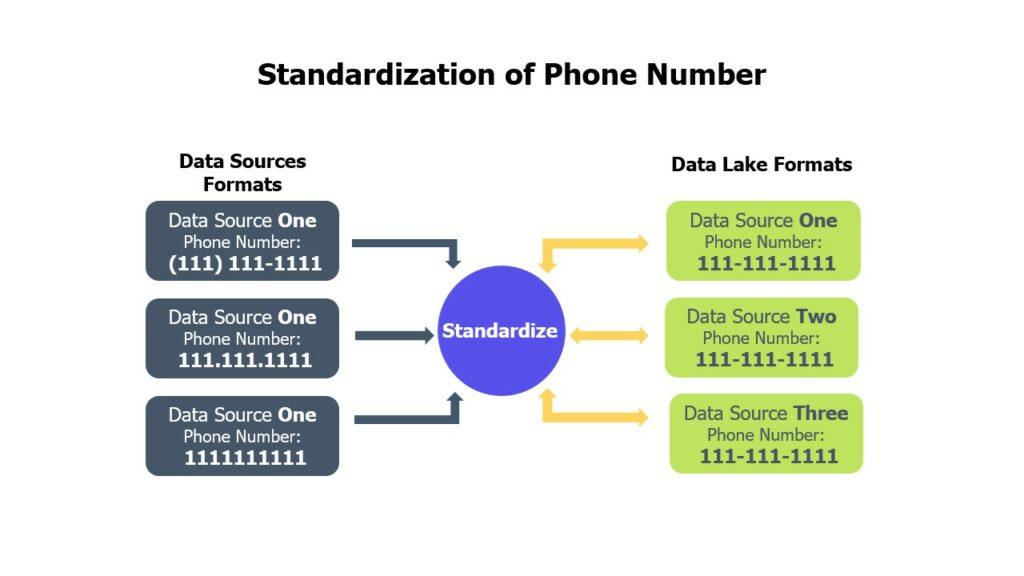
Since data sources collect information for different purposes, similar data is very often stored within different data models and on different database systems. Hence, the same information may be represented in a variety of ways and in different formats.\nData standardization converts information into a common format and common terminology. This delivers the ability to build reports and applications without having to create multiple mappings of the same data. For example, phone numbers are converted into one format:\n

Combine/Enrich

The data pipelines pull together the information for each company from all data sources. In addition, the data is enhanced with statistical risk scoring generated by data science models.

Integrate

In addition to ingesting data from various sources, the Convr application performs real-time integration of data from data analytics companies (such as Verisk, Core Logic, etc.) and social media sites (such as Google places, Yelp, and Bing)

Deliver

Data is delivered to our customers via Convr application UI (User Interface) and via data API’s.

Convr Data Infrastructure

Convr data pipelines run on AWS cloud resources. Data pipelines use S3 (Simple Storage Service) for storage and EC2 (Elastic Compute Cloud) nodes for processing.

Convr applications and data pipelines are implemented using open-source software:

  • Python programming language
  • ElasticSearch for our data lake
  • Apache Spark™, Apache Kafka™ for data transformation
  • Flask framework for web services and data API’s
  • mySQL, Maria for our application databases

Our data stack philosophy:

  • Look to mature open-source software with large community adoption and support rather than re-inventing the wheel
  • Ensure the software scales easily as data is constantly increasing and new products are being added as the business grows
  • Automate processes as much as possible by using CI/CD (Continuous Integration/Continuous Deployment) and other orchestration tools

Given the critical importance of data to our business and the business of our customers, Convr is committed to ensuring the standards and security of our data platform. We are also committed to the education of our customers and the transparency of our operations. Please look forward to other articles describing our infrastructure and capabilities.

blogs

Keep Reading

More articles on AI, underwriting and the future of commercial P&C.

XX MIN READ

Convr Accelerates MGA Growth

From Intake automation efficiency to data modeling for hidden insights, Convr is helping Managing General Agents (MGAs) turn fragmented submission documents into structured, enriched data – accelerating clearance, rating, and quote times to unleash profitable growth.

Everyone knows the best models win at taming documents!\nOur Intake module ingests and enriches data from both structured and unstructured documents including PDFs, Excel and emails across commercial property and casualty (P&C) insurance asset types, including ACORDs, Inspection Forms, SOVs, Loss Runs, Schedules, and more.

Powered by Convr AI and the Risk Context Engine – a purpose-built commercial insurance ontology, knowledge graph, and semantic layer that powers a multi-line schema – transforming fragmented submissions into structured, decision-ready intelligence. By grounding every document, application and data source into a consistent schema, Convr Intake ensures contextually complete, consistent, and reliable data from the start. The result is faster processing, fewer manual touchpoints, and improved risk clarity for accelerated MGA Growth.

Through Risk 360 – a commercial insurance data lake comprised of the digital footprints of millions of businesses – Convr standardizes addresses, performs geo-coding, enriches submissions with CAT modeling codes, and adds property intelligence data such as distance to coast and other hazard indicators. The enrichment delivers a holistic decision-ready view of risk prepared for underwriting, rating, and carrier reporting.

By eliminating re-keying and reducing back-and-forth data gathering, submissions are ready to quote in less than 10 minutes! This is how our MGA customers underwrite smarter and faster to unlock substantial written-premium growth without adding to headcount.

If you’re exploring ways to scale faster with AI, better data and meaningful operational efficiency, Convr welcomes the opportunity to share how leading MGAs are using Convr today.\nJust reach out to Convr today to see how we can help!

XX MIN READ

Convr® Evolves Data Catalog for Faster, More Transparent Underwriting

Convr®, took a leap toward delivering the next big advancement in artificial intelligence (AI) underwriting through the enhanced performance and usability improvements of its Data Catalog within its commercial insurance underwriting workbench in 2026. Convr’s Data Catalog makes it easier for underwriting team members to discover the thousands of data sources that are compiled in Convr’s Risk 360 data lake.\nThe leading artificial intelligence (AI) company serving commercial insurance organizations with its underwriting workbench implemented a new view for the company’s Data Catalog which aligns with its commitment to transform the commercial insurance underwriting industry and enables frictionless underwriting.\nWithin the model, users can easily glean insights from its extensive list of nearly 3,000 external data sources. Underwriters can also search across all Convr data sources, filter through the list by location, and view detailed information about each source with greater clarity. This new format allows users to quickly understand what data is available and how frequently it is refreshed.\nWhat it shows:The Data Catalog displays detailed information about each data source, including:

  • Source name
  • Data type
  • Source update frequency
  • Convr update frequency
  • State
  • Last updated date

The new table format makes it much faster and more intuitive for users to locate the data they need. The clickable links are up-to-date avenues that serve as a streamlined source to greater information and transparency into submission data. Our customers have much to gain from this new functionality.\nTogether, these advancements within the platform's user interface mark a pivotal moment, advancing the industry toward a more intelligent and trustworthy underwriting process built on accessible, high-quality data.

XX MIN READ

Are You Ready for an Underwriting Workbench? 4 Signs You’re Ready to Implement Now

A commercial property and casualty P&C insurance carrier’s sustainability and long-term success is best determined not only by their approach to solving today’s problems, but how poised they are for adaptation and future growth.\nUnderwriting workbenches are a powerful and effective solution to solving some of today’s top underwriting issues, but how they align to an organization’s existing processes, technologies and long-term goals will ultimately determine their success and lasting power.\nFor underwriting teams and commercial insurance organizations as a whole, there are some not-so-subtle signals that your underwriters could be ready for an underwriting workbench now and for many years into the future.\nTake a look below to see how these four signs show up across the people, processes and technology within your organization:

  1. Underwriting team members are forced to toggle between multiple systems to evaluate a single risk, losing valuable time that could be used working on other higher-value submissions
  2. Critical data is manually rekeyed or copy-pasted across tools, rather than being automatically and consistently captured, losing efficiency and productivity
  3. Documents such as PDFs, loss runs and emails, etc. are driving most underwriting decisions but are fragmented, manually processed files and hard to operationalize
  4. Quote and bind turnaround times are inconsistent or slipping, resulting in missed opportunities and losing business for your organization

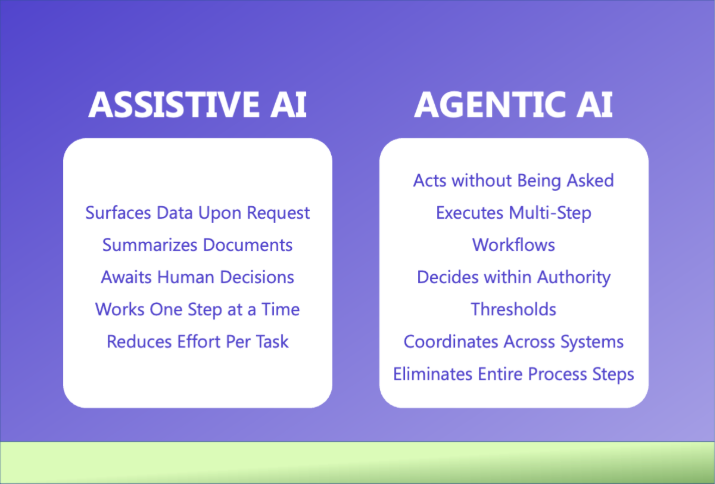
\nOur team has deep insurance experience—so we get it. It’s tough to get everyone on board to implement a new tool or end-to-end solution . . . but the number of companies that have realized quick wins with Convr’s off-the-shelf, AI underwriting capabilities is remarkable—so why wouldn’t you give us a go? \n \nIf you’ve done a simple search online, you’ve likely already discovered the Convr AI Underwriting Workbench, considered our capabilities and have some understanding of how our solutions can solve some of your team’s biggest problems. Powered by a commercial P&C insurance ontology, our workbench enriches and expedites submissions decisions – reducing submission through quote times by 70%, increasing new business win rates, and quickly identifies renewal material changes. \nWith Convr you can start with the module that addresses your biggest bottleneck today, then grow into Convr's broader workbench over time. As a refresher, here are some proven off the shelf solutions you might consider: \nIntake: Our Intake engine eliminates manual submission processing by digitally ingesting, preparing and analyzing underwriting documents. For every submission that flows through your business, we extract key data points and augment the information with third-party data to broaden and deepen the risk profile. By automating and digitizing the insurance application process, underwriting teams can quote faster, with more confidence, enhanced application data and deeper insights. \nRisk 360: Commercial insurance underwriting teams can streamline research and enhance applicant data by enriching submissions with the power of AI. Risk 360 is a vast data lake comprised of the digital footprint of millions of businesses—built with an underlying knowledge graph that unleashes detailed insights from the intersection of tens of thousands of data elements. \n \nConvr AI: Deep Learning Models, Agentic and Generative AI are assistive to users generating a risk summary from submission data and helping customers perform their workflow tasks with greater ease, improving productivity. \nConvr has the skill and enthusiasm to quickly roll-out your project and implement one of these programs today. These off-the-shelf options we presented above are standard implementations that can be up and running for your operation in as few as four weeks and are a great way to advance your team’s underwriting business goals. Just ask and we’ll give you a customer reference that recently got up and running in as few as 19 days!\nTo learn more about the many modules within Convr’s AI-powered underwriting workbench contact us today at convr.com. \n

Realize End-to-End Underwriting Excellence with Convr AI

Experience how commercial P&C insurance organizations benefit from submission through quote with a frictionless process enriched by AI decisioning, empowering them to make better decisions, faster.