February 13, 2024
xx min read

Accelerating the Pace of Change

In insurance, the acceleration of tech advancement gives us increased hope that we can better understand and manage risk and thereby provide a better CX.

Since Moore’s Law was introduced by Gordon Moore, co-founder of Intel, we’ve accepted that the rate of technological advancement continues to accelerate, just as the number of transistors on a microchip has roughly doubled every two years.  

\n

In the property and casualty (P&C) insurance industry that acceleration of technological advancement gives us increased hope that we can better understand and manage risk and thereby provide a better customer experience. 

\n

Sources of Innovation Acceleration 

\n

At Convr, we work to support the accelerating pace of technological change by understanding issues behind it. Our take is that there are four primary drivers of today’s innovation acceleration: 

\n

1. Need — The increasing universe of perils as well as unprecedented severity and frequency growth are helping drive the accelerating rate of technological advancement in insurance. Climate change, natural disasters, social unrest, and mass immigration are just a few of the exposures demanding new assessment and risk mitigation tools. With new perils ever looming, P&C insurers are focusing their technology investments on these emerging realities as well as other more enduring issues such as efficiency and accuracy. 

\n

2. Appetite — Broad and rapid adoption of the internet, digital tools, mobile devices, cloud storage, apps and more are also supporting innovation acceleration. This convergence of new technologies and the appetite for adoption is spurred by new innovation in many fields with both consumers’ and business users’ escalating expectations for ease and quality experiences. Technology utilization among the youngest in our educational institutions is also fueling this demand for new and innovative technologies. The net result is that broad adoption is forcing organizations of all sorts to embrace technological advancements just to stay relevant. 

\n

3. Advanced Capabilities — Faster computers and greater data storage capacity are helping to drive technology forward. Among the resulting benefits of this are faster computations, even as we develop more complex algorithms and data sets. And with that, we are deriving new insights to support better decision-making and experiences. Furthering this gratuitous cycle, are advances in artificial intelligence, simplified approaches to coding and better data analytics tools – fueling accelerated innovation and information mastery. 

\n

4. Knowledge Sharing — Increased collaboration and data aggregation is also fostering technological acceleration. At Convr, we facilitate this by designing pathways for disparate platforms or networks to be accessed simultaneously for rapid consideration and then disseminated as insights at the moment of decisioning. This “collaboration” between technologies and users facilitates the aggregation of data, better and faster decision-making, and also advances the pace of continuous learning. 

\n

Exploiting Acceleration 

\n

At Convr, we believe within the realm of technology acceleration, hyper-connectivity – deploying big data and artificial intelligence applications to advance business efficiency and decisioning – provides an enormous opportunity for profitable growth.

\n

In the insurance space, we prioritize the following disciplines for exploiting acceleration: 

\n

Data Analytics and AI: Invest in advanced data analytics and artificial intelligence (AI) capabilities to analyze vast amounts of data and identify patterns, correlations, and insights related to current and emerging risks. Machine learning algorithms can help insurers collect and process vast data sets, detect early warning signs, predict trends, and develop proactive risk mitigation strategies. 

\n

Geospatial Analysis: Leverage geospatial analysis tools to assess risks related to climate change, natural disasters, social unrest, terrorism targets, or population movements. Mapping technologies can help insurers understand and visualize the potential impact of these emerging issues for specific regions and properties, enabling better risk assessment and pricing. 

\n

Predictive Modeling and Scenario Analysis: Develop sophisticated predictive models and scenario analysis techniques to assess the potential impact of emerging trends on insurance portfolios. This can help insurers evaluate their exposures, stress test their underwriting appetite and producer strategies, and develop mitigation or remediation plans accordingly. 

\n

Methodical Collaboration: Foster collaborations and partnerships with technology providers, and other innovation accelerators to jointly identify and build solutions that can address improved risk management and mitigation. Thinking creatively about partnerships as opposed to competitors can facilitate knowledge sharing and the development of innovative solutions for the betterment of both the insurance industry and customers. 

\n

Customer Engagement and Education: Harness customer input and then utilize technology to enhance customer engagement and decision-making. With supportive training, we can then deliver new tools that deliver documented financial and operational performance improvement.  

\n

The accelerating pace of change will continue to demand nimble technology adoption for competitive advantage and perhaps survival in many industries, but especially within insurance. Where once there was a claims system there is now an end-to-end policy management system. Where there was a team trained in business intelligence tools like Tableau, there is now a team of data scientists using multiple business intelligence tools and AI.  

\n

With explosive computing power at the core of innovation and active machine learning and AI-driven modeling, early investment will deliver sustained competitive advantage so if you are looking to align technology investments with these innovations, the sooner, the better. 

\n

At Convr, we are committed to helping commercial P&C organizations increase efficiency and profitability with improved understanding, management, and mitigation of known and emerging risks. To do this, we help them adopt the best for-purpose, supportive technology that has the flexibility to evolve with the industry and integrate seamlessly with emerging tools and requirements. In the P&C insurance industry the accelerating pace of change gives us hope that we will continue to better understand and manage risk for a safer world and improved customer experience.  

blogs

Keep Reading

More articles on AI, underwriting and the future of commercial P&C.

XX MIN READ

Convr Accelerates MGA Growth

From Intake automation efficiency to data modeling for hidden insights, Convr is helping Managing General Agents (MGAs) turn fragmented submission documents into structured, enriched data – accelerating clearance, rating, and quote times to unleash profitable growth.

Everyone knows the best models win at taming documents!\nOur Intake module ingests and enriches data from both structured and unstructured documents including PDFs, Excel and emails across commercial property and casualty (P&C) insurance asset types, including ACORDs, Inspection Forms, SOVs, Loss Runs, Schedules, and more.

Powered by Convr AI and the Risk Context Engine – a purpose-built commercial insurance ontology, knowledge graph, and semantic layer that powers a multi-line schema – transforming fragmented submissions into structured, decision-ready intelligence. By grounding every document, application and data source into a consistent schema, Convr Intake ensures contextually complete, consistent, and reliable data from the start. The result is faster processing, fewer manual touchpoints, and improved risk clarity for accelerated MGA Growth.

Through Risk 360 – a commercial insurance data lake comprised of the digital footprints of millions of businesses – Convr standardizes addresses, performs geo-coding, enriches submissions with CAT modeling codes, and adds property intelligence data such as distance to coast and other hazard indicators. The enrichment delivers a holistic decision-ready view of risk prepared for underwriting, rating, and carrier reporting.

By eliminating re-keying and reducing back-and-forth data gathering, submissions are ready to quote in less than 10 minutes! This is how our MGA customers underwrite smarter and faster to unlock substantial written-premium growth without adding to headcount.

If you’re exploring ways to scale faster with AI, better data and meaningful operational efficiency, Convr welcomes the opportunity to share how leading MGAs are using Convr today.\nJust reach out to Convr today to see how we can help!

XX MIN READ

Convr® Evolves Data Catalog for Faster, More Transparent Underwriting

Convr®, took a leap toward delivering the next big advancement in artificial intelligence (AI) underwriting through the enhanced performance and usability improvements of its Data Catalog within its commercial insurance underwriting workbench in 2026. Convr’s Data Catalog makes it easier for underwriting team members to discover the thousands of data sources that are compiled in Convr’s Risk 360 data lake.\nThe leading artificial intelligence (AI) company serving commercial insurance organizations with its underwriting workbench implemented a new view for the company’s Data Catalog which aligns with its commitment to transform the commercial insurance underwriting industry and enables frictionless underwriting.\nWithin the model, users can easily glean insights from its extensive list of nearly 3,000 external data sources. Underwriters can also search across all Convr data sources, filter through the list by location, and view detailed information about each source with greater clarity. This new format allows users to quickly understand what data is available and how frequently it is refreshed.\nWhat it shows:The Data Catalog displays detailed information about each data source, including:

  • Source name
  • Data type
  • Source update frequency
  • Convr update frequency
  • State
  • Last updated date

The new table format makes it much faster and more intuitive for users to locate the data they need. The clickable links are up-to-date avenues that serve as a streamlined source to greater information and transparency into submission data. Our customers have much to gain from this new functionality.\nTogether, these advancements within the platform's user interface mark a pivotal moment, advancing the industry toward a more intelligent and trustworthy underwriting process built on accessible, high-quality data.

XX MIN READ

Are You Ready for an Underwriting Workbench? 4 Signs You’re Ready to Implement Now

A commercial property and casualty P&C insurance carrier’s sustainability and long-term success is best determined not only by their approach to solving today’s problems, but how poised they are for adaptation and future growth.\nUnderwriting workbenches are a powerful and effective solution to solving some of today’s top underwriting issues, but how they align to an organization’s existing processes, technologies and long-term goals will ultimately determine their success and lasting power.\nFor underwriting teams and commercial insurance organizations as a whole, there are some not-so-subtle signals that your underwriters could be ready for an underwriting workbench now and for many years into the future.\nTake a look below to see how these four signs show up across the people, processes and technology within your organization:

  1. Underwriting team members are forced to toggle between multiple systems to evaluate a single risk, losing valuable time that could be used working on other higher-value submissions
  2. Critical data is manually rekeyed or copy-pasted across tools, rather than being automatically and consistently captured, losing efficiency and productivity
  3. Documents such as PDFs, loss runs and emails, etc. are driving most underwriting decisions but are fragmented, manually processed files and hard to operationalize
  4. Quote and bind turnaround times are inconsistent or slipping, resulting in missed opportunities and losing business for your organization

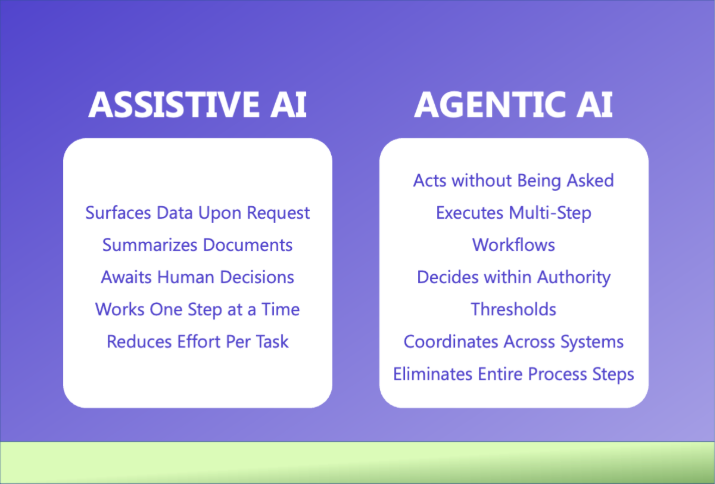
\nOur team has deep insurance experience—so we get it. It’s tough to get everyone on board to implement a new tool or end-to-end solution . . . but the number of companies that have realized quick wins with Convr’s off-the-shelf, AI underwriting capabilities is remarkable—so why wouldn’t you give us a go? \n \nIf you’ve done a simple search online, you’ve likely already discovered the Convr AI Underwriting Workbench, considered our capabilities and have some understanding of how our solutions can solve some of your team’s biggest problems. Powered by a commercial P&C insurance ontology, our workbench enriches and expedites submissions decisions – reducing submission through quote times by 70%, increasing new business win rates, and quickly identifies renewal material changes. \nWith Convr you can start with the module that addresses your biggest bottleneck today, then grow into Convr's broader workbench over time. As a refresher, here are some proven off the shelf solutions you might consider: \nIntake: Our Intake engine eliminates manual submission processing by digitally ingesting, preparing and analyzing underwriting documents. For every submission that flows through your business, we extract key data points and augment the information with third-party data to broaden and deepen the risk profile. By automating and digitizing the insurance application process, underwriting teams can quote faster, with more confidence, enhanced application data and deeper insights. \nRisk 360: Commercial insurance underwriting teams can streamline research and enhance applicant data by enriching submissions with the power of AI. Risk 360 is a vast data lake comprised of the digital footprint of millions of businesses—built with an underlying knowledge graph that unleashes detailed insights from the intersection of tens of thousands of data elements. \n \nConvr AI: Deep Learning Models, Agentic and Generative AI are assistive to users generating a risk summary from submission data and helping customers perform their workflow tasks with greater ease, improving productivity. \nConvr has the skill and enthusiasm to quickly roll-out your project and implement one of these programs today. These off-the-shelf options we presented above are standard implementations that can be up and running for your operation in as few as four weeks and are a great way to advance your team’s underwriting business goals. Just ask and we’ll give you a customer reference that recently got up and running in as few as 19 days!\nTo learn more about the many modules within Convr’s AI-powered underwriting workbench contact us today at convr.com. \n

Realize End-to-End Underwriting Excellence with Convr AI

Experience how commercial P&C insurance organizations benefit from submission through quote with a frictionless process enriched by AI decisioning, empowering them to make better decisions, faster.